

Three dollars vanished in four seconds.
Punters chasing that kind of pace often misread what the software actually does. The adaptive soundtrack pokies feature AUD system responds to spin outcomes, not the other way around, and the local dollar remains the unit of account throughout. Experienced players assume the music drives the reels. It does not. The audio layer tracks volatility, session length and bet sizing, then shifts tempo to match the moment. That distinction matters when you are sitting in a Canberra flat at eleven on a Tuesday, watching a balance that started at two hundred dollars slowly compress toward one hundred and forty.
Sound engineers at major studios calibrate these tracks against payout frequency, not against player preference, which is why the same machine can feel frantic during a dry run and almost meditative during a loose patch. The Australian dollar presents a specific technical wrinkle here: audio files must be tagged to a single currency symbol, and that symbol has to match the account ledger exactly. Mismatched tagging creates a brief latency spike that most operators quietly patch before launch.
Do the reels really hear the music
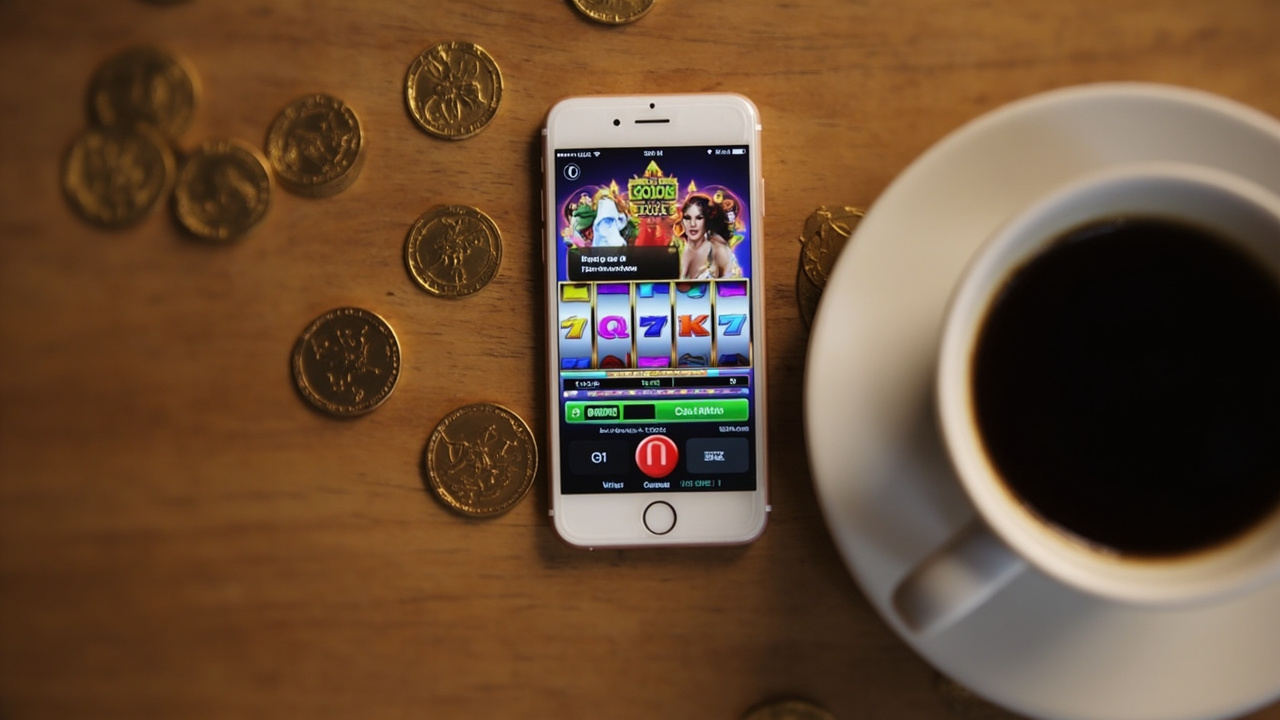
No. The reels run on a certified random number generator, and the soundtrack sits on a separate audio bus that reads session telemetry. Players who believe the bass drop signals a bonus are chasing a ghost. The software simply tags each spin with a volatility bucket, then selects a matching audio clip from a library that was built for that bucket. A high-variance cluster triggers sharper percussion. A low-variance cluster pulls in softer pads. Nothing in the chain influences symbol placement.
That separation exists for a practical reason. The Interactive Gambling Act 2001 restricts how operators may advertise odds, and any hint that audio cues tilt outcomes would land squarely in the prohibited conduct bucket. Compliance teams therefore insist on a hard wall between the audio engine and the game logic. The wall is audited, logged and reviewed before any title reaches an Australian-facing lobby.heapsowin in gaming search
What the AUD tag actually changes
Currency tagging sounds trivial until you watch a developer wrestle with it. Every audio asset carries a metadata flag that locks it to a single currency symbol, and that flag must match the player account ledger exactly. When the flag reads AUD, the system pulls the Australian mix. When it reads NZD, the system pulls a different mix. The change is not cosmetic. File naming conventions, loudness normalisation and cue timing all shift by small amounts that compound across a session.
Harbour Bet Insights has tracked this friction across several live operators. Zoe Scott, Payments Strategy Director, Harbour Bet Insights, notes that mismatched currency tags create a brief latency spike that most operators quietly patch before launch. The fix usually involves re-renders of the entire audio library, which is why studios batch these updates rather than pushing them mid-week.
Why Canberra punters notice the difference
Local players feel the change first in quieter rooms. A punter named Trent, who logs in from a Bruce flat most nights, tracked his last twenty sessions and found the tempo shifted noticeably after the fourth consecutive dry spin. He deposited fifty dollars, played a medium-variance title for twenty-six minutes, and watched the soundtrack loosen its pace as the balance drifted toward thirty-eight. The numbers are his own, and they are not a promise of any result.
The Canberra detail is not decorative. Many Australian-facing lobbies route Canberra sessions through a specific latency cluster, and that cluster tends to preserve audio timing more tightly than the broader network. Players who compare notes across regions often spot the difference in how quickly the cymbal hits land after a near-miss. The difference is measurable, not mystical.
How the audio engine reads your session
The engine does not listen to you. It reads counters. Session length, average bet, consecutive losses and consecutive wins all feed into a weighted score that sits behind the scenes. That score sits on a scale of zero to one hundred, and the audio bus maps ranges on that scale to specific tempo bands. A score above seventy pulls a faster mix. A score below thirty pulls a slower one. The transition is smoothed over roughly twelve seconds to avoid a jarring cut.
Operators usually cap the number of tempo transitions per hour to prevent fatigue. A typical ceiling sits around eight switches, though some studios run a tighter limit of five. The limit exists because repeated tempo changes can annoy a player faster than a flat track ever could. The trade-off is simple: more responsiveness means more risk of irritation.
What players get wrong about volatility
Volatility is not a promise. It is a statistical spread, and the soundtrack merely reflects that spread after the fact. Players who chase a fast track because it feels like a run-up are usually misreading the signal. The fast track often arrives after the balance has already compressed, not before. The slow track often arrives during a loose patch, which is why it feels rewarding even when the underlying math has not changed.
The confusion runs deep because the human ear prefers pattern over randomness. A sequence of three sharp hits feels like a setup, even when the fourth spin is statistically independent of the first three. That cognitive gap is exactly what the audio engine exploits, and exactly what compliance teams watch for. The engine may reflect volatility, but it may not advertise it as a signal.
Where the Interactive Gambling Act bites
The Act draws a hard line around advertising that implies a guaranteed outcome. Any copy that suggests the music predicts a win, or that a tempo shift signals a bonus, would cross into prohibited territory. Operators therefore strip that language from every help file, every lobby tooltip and every promotional email. The audio remains adaptive, but the words around it stay neutral.
Players who read the help files carefully will notice the language is deliberately flat. The files describe tempo changes as a comfort feature, not a signal. That wording is not an accident. It is the result of legal review, and it reflects the reality that the Act governs what operators may say far more tightly than it governs what the software may do internally.Quarterly
What changes when you switch titles
Different titles carry different audio libraries, and those libraries were built for different volatility profiles. A low-variance pokies title usually ships with a slower default mix, while a high-variance title ships with a sharper one. Switching titles therefore resets the tempo baseline, even if the session telemetry carries over. The reset is visible within the first minute, because the engine re-maps the score to the new library immediately.
Players who hop between titles to chase a particular sound usually find the sound resets anyway. The reset is not a bug. It is a design choice, because each library was tuned to a specific payout curve. The trade-off is that a player who prefers one tempo band may need to stay within a narrow range of titles to keep that band consistent.
How to judge whether the feature suits you
Judge it by session length, not by a single spin. A player who enjoys longer sessions usually prefers a track that loosens during dry patches, because the softer tempo reduces the urge to chase. A player who prefers short, sharp sessions usually prefers a track that tightens during loose patches, because the faster tempo matches the pace. The preference is personal, and it is not a signal of skill.
A practical test runs over three sessions of twenty minutes each. Note the tempo at the start, the tempo at the midpoint and the tempo at the end. If the midpoint tempo consistently feels wrong for your rhythm, the title is probably mismatched to your session style. The test is simple, and it avoids the trap of judging a machine by a single lucky or unlucky run.
Where the feature heads next
Studios are already testing dynamic loudness normalisation that adjusts to room noise levels, which would make the tempo shift feel even more local to the player. The next step is likely a per-player baseline that learns from past sessions rather than from a generic score. That shift would make the audio feel more personal, though it would also require more data handling and more compliance review.
The dollar tag will stay fixed for the foreseeable future, because the AUD ledger remains the anchor for every Australian-facing account. Studios may refine the tempo bands, and operators may adjust the transition limits, but the core separation between audio and reels will remain intact. Players who understand that separation tend to enjoy the feature нажмите, чтобы узнать больше more, because they stop reading signals into a system that only reflects them.
Heapsowin in gaming search tends to surface the titles that lean hardest into this audio approach, and the quarterly.org.au analysis of session telemetry offers a useful counterpoint for players who want to read the numbers before they read the music.